Knowing what to bring to a concert can make the difference between a night you enjoy and a night you spend worrying about your phone battery or a missing ID.
Whether you’re heading to an arena show, a festival stage, or an outdoor amphitheater, a little planning goes a long way.
This guide breaks down exactly what to pack, what to wear, and what to leave at home so you can focus on the music instead of logistics.
What to Bring to a Concert?
The most important things to bring to a concert are your ticket, a valid ID, your phone, a power bank, a small amount of cash, and any medication you need.
These items cover entry requirements, safety, and comfort. Everything else depends on the venue, the weather, and personal preference. Here’s a quick breakdown by category:
| Category | What to Bring | Why You Need It |
|---|---|---|
| Entry Essentials | Concert ticket, ID proof | Required for entry and verification |
| Tech & Power | Phone, power bank, charging cable | For tickets, communication, photos, and emergencies |
| Money & Payments | Wallet, debit/credit card, some cash | For food, merchandise, transport, or emergencies |
| Health & Hygiene | Essential medication, tissues, hand sanitiser | For personal health and hygiene |
| Comfort & Safety | Earplugs, water bottle (if permitted) | Protects your hearing and helps you stay hydrated |
| Personal Storage | Small bag or purse | Keeps your essentials secure and organised |
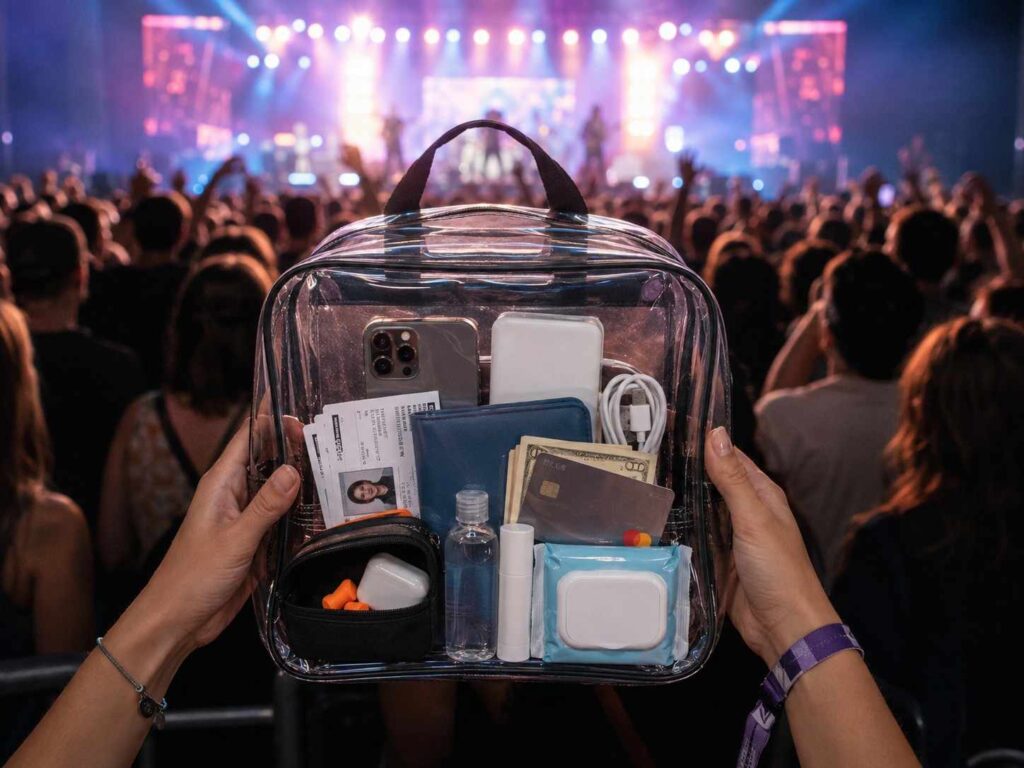
Concert Packing Checklist
Here is a concert packing checklist to ensure you have all the essential items for a comfortable and hassle-free experience.
Essentials You Should Always Carry
Your ticket and ID cannot be bargained with. In most cases, there will not be any paper tickets, so ensure that your phone is fully charged before attending the event and that the ticket has been downloaded to avoid connection problems when inside the venue.
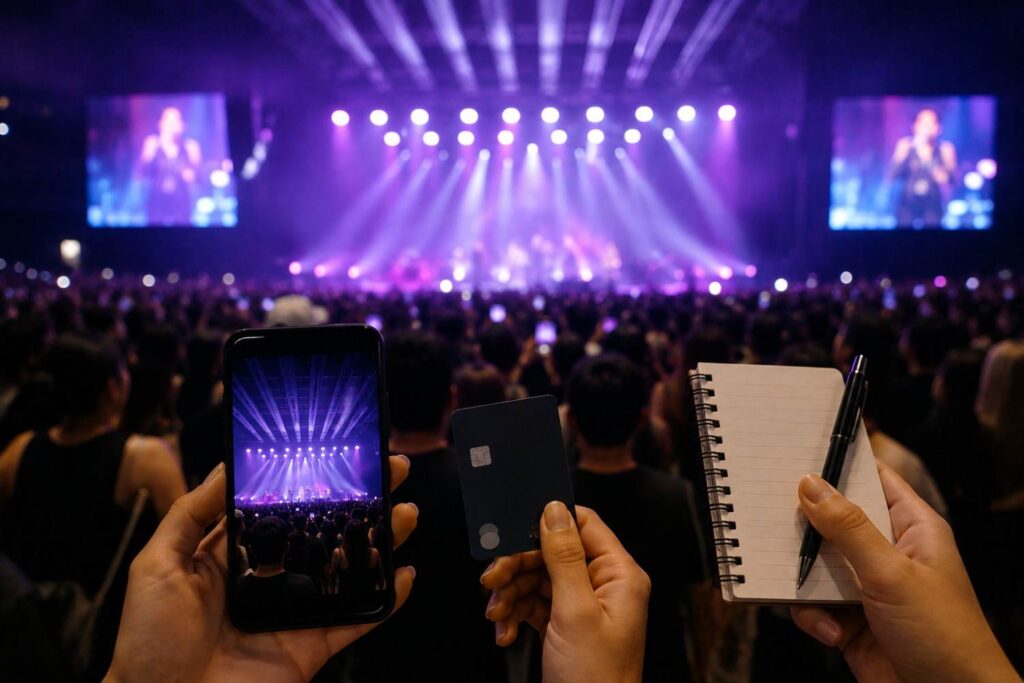
It is important to have some cash with you since there might be some vendors inside the stadium who do not take card payments.
A few other items worth adding to this list:
- A copy of your ticket saved as a screenshot, in case the app crashes
- A debit or credit card as backup payment
- A small notebook or your phone’s notes app if you want to jot down setlists or memories
Clothing and Comfort Items
Comfortable shoes will play a bigger role in your outfit than anything else. You will definitely spend some time on your feet, walking around, dancing, and standing, so this is not the occasion to wear new shoes.
Bring a sweater regardless of how warm it might be outside. Air-conditioned venues and open-air places that chill in the evening will catch many unprepared.
Health and Personal Care
Bring any medications that you use regularly, along with things like painkillers, tissues, and sanitizers. Places with lots of people around give you limited options for visiting a pharmacist when you need something.
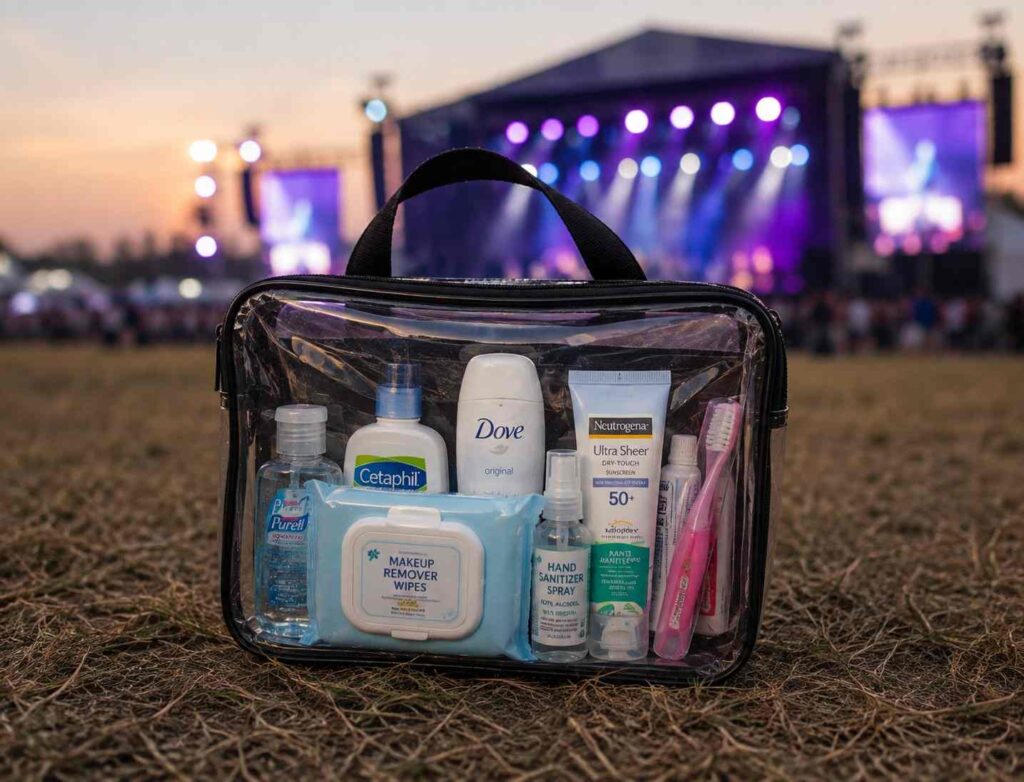
Earplugs should also be a part of this packing list. The sounds of the concerts can easily surpass safe decibel levels, and the use of foam or filtered earplugs helps avoid this problem.
Tech and Gadgets
A power bank is among the most important items to bring along to the music event. With navigation, tickets, and photographs, the battery tends to run down quickly, and the venues have their own limited availability for charging points.
Carry a charging cable that works with your smartphone, and if your phone works with a wireless charger, consider a wireless power bank.
It’s best to bring either a simple point-and-shoot or a smartphone with a decent camera app rather than trying to bring a professional camera because some venues prohibit it.
What to Wear to a Concert
When getting ready to go to a concert, it is important that you pick an outfit that will keep you comfortable throughout the entire night. For example, breathable material, closed-toe shoes for outdoor concerts, and layers that you can take off and on all make for a more comfortable outfit choice.

Be sure to avoid wearing anything too tight since you might need to stand for a while, walk around, or even dance.
What to Pack for an Outdoor Concert
Daytime outdoor concerts require protection from the sun, whereas nighttime outdoor concerts require warmer clothing. Sunscreen, a hat, and shades can be used if you attend an outdoor concert that begins in the daytime, whereas a light jacket will suffice if it starts at nighttime.
Other outdoor-specific items to consider:
- A poncho or small umbrella if rain is possible (check the venue’s policy first)
- Closed-toe shoes, since grass and gravel are common at outdoor venues
- A reusable water bottle if the venue allows refills
What to Pack for an Indoor Concert
Indoor venues are more climate-controlled, but bag policies tend to be stricter. Focus on the essentials from the checklist above, since large bags and outside food or drinks are usually restricted or banned entirely.
A light layer is still worth packing, as indoor arenas often run cold with air conditioning, especially compared to how warm it can get once the crowd fills in.
Concert Bag Policy: What to Check Before You Go
Each place has its own set of bag guidelines, and by knowing the guidelines before going in, you won’t have to worry about leaving things behind at the entrance. Today’s stadiums and arenas are all starting to develop guidelines when it comes to bags that are allowed.
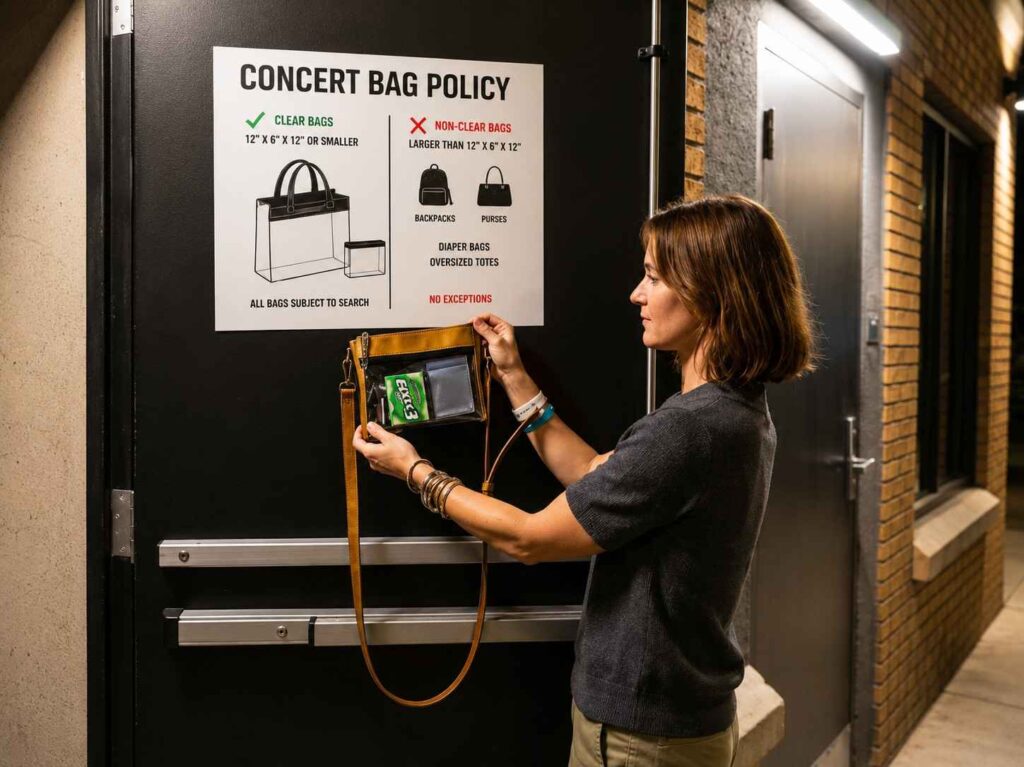
Before you leave home, check the venue’s official website or ticketing confirmation email for specifics. Common restrictions include:
- Maximum bag size, often around 12″ x 6″ x 12″
- No backpacks or large tote bags
- Clear bag requirements at many major stadiums
- Restrictions on outside food, drinks, and professional cameras
If you’re unsure, a small clutch or clear bag is the safest choice for most venues.
What Not to Bring to a Concert
Do not bring any restricted items like food and beverages, professional cameras with interchangeable lenses, laser pointers, and even weapons. These items will not be allowed in most venues and are typically confiscated during security check-in, which will cause delays in the line.
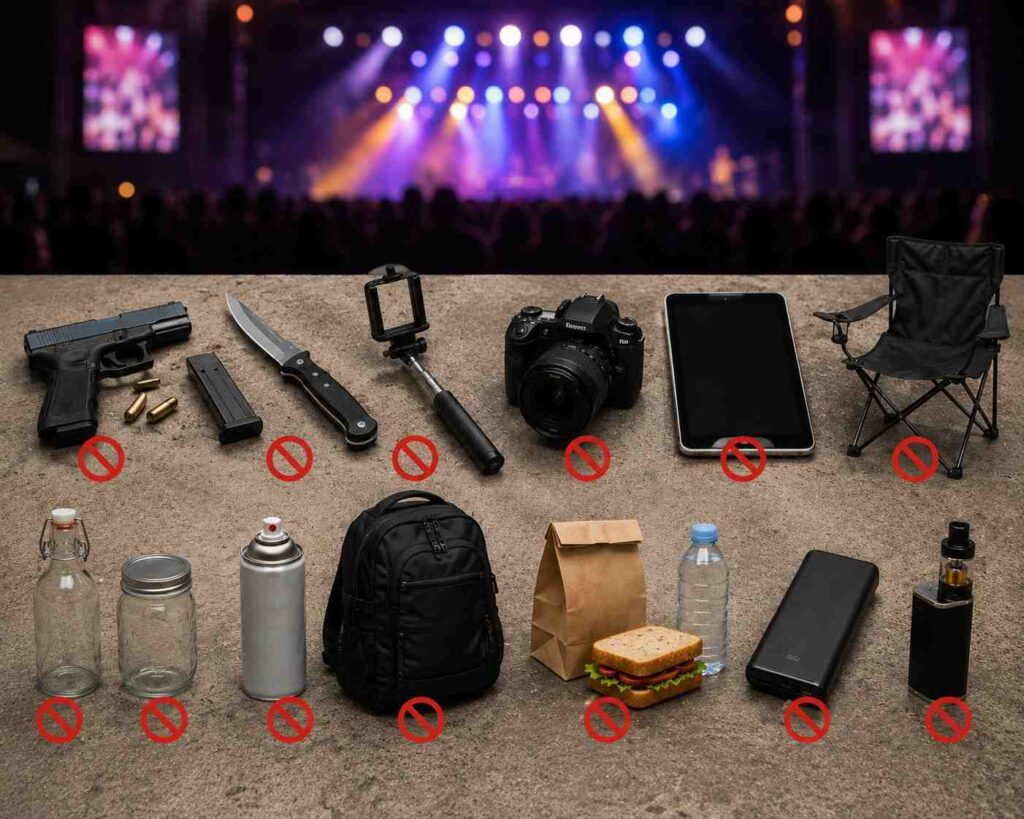
Other items to leave at home:
- Large umbrellas (unless the venue specifically allows them)
- Selfie sticks or tripods
- Glass containers
- Any bag that doesn’t meet the venue’s size or material policy
- Valuables you don’t need, like extra jewelry or multiple cards
How to Prepare the Day Before a Concert
Preparing the day before means checking your ticket, confirming the venue’s bag and entry policies, and laying out your outfit so the day of the show feels less rushed. This is also a good time to charge your phone, power bank, and any camera equipment fully.
A short pre-concert checklist:
- Double-check your ticket and confirm the venue address and doors time
- Review the bag policy and pick your bag accordingly
- Charge all devices overnight
- Plan your outfit and shoes
- Check the weather forecast, especially for outdoor shows
Concert-Day Tips
Be there earlier than you think you have to be, because of all the delays that happen due to security and parking. The doors usually open an hour or two before the show starts.
Make sure to drink a lot during the night, particularly in outdoor gigs or in general admission floor areas where the crowd is tightly packed. Have yourself a meal before going just to avoid the line in the concessions area when the show starts.
Concerts happening this year check out fast:
Conclusion: Bring Essentials Like a Ticket, Valid ID, Phone, etc to a Concert
Bringing the right essentials, like a ticket, valid ID, phone, power bank, and a bit of cash, covers most of what you’ll actually need at a concert.
Pack light, check the venue’s bag policy in advance, and dress for both the weather and hours of standing.
A little preparation means you can spend the night focused on the show instead of managing what’s in your bag.
FAQs
The 3-3-3 rule means packing 3 tops, 3 bottoms, and 3 pairs of shoes for a trip. It applies more to festival weekends than a single concert night.
Graphic tees, denim, and layered jackets paired with sneakers or boots are trending. Bold accessories and band merch remain popular too.
Jeans or shorts with a fitted top, a slip dress with sneakers, or a jumpsuit all work well. The right choice depends on the venue and weather.
Sneakers are the safest bet for standing and walking long distances. Boots suit outdoor or colder shows, while heels are best saved for seated indoor events.
Skip uncomfortable heels, restrictive clothing, and anything with loose parts that could get caught in a crowd. New, unbroken-in shoes are also a common mistake.